 EUROPE.AI.NEWS
AI NEWS › EU RULES · EXPLAINER
Fake or real? AI-made pictures and videos must carry hidden labels in the EU from 2 December
Companies whose AI tools were already on sale before August have until 2 December to add machine-readable marks to what the tools create.
By Gustavo Toledo Salles · Europe.AI.News · Explainer · 3 Nov 2026
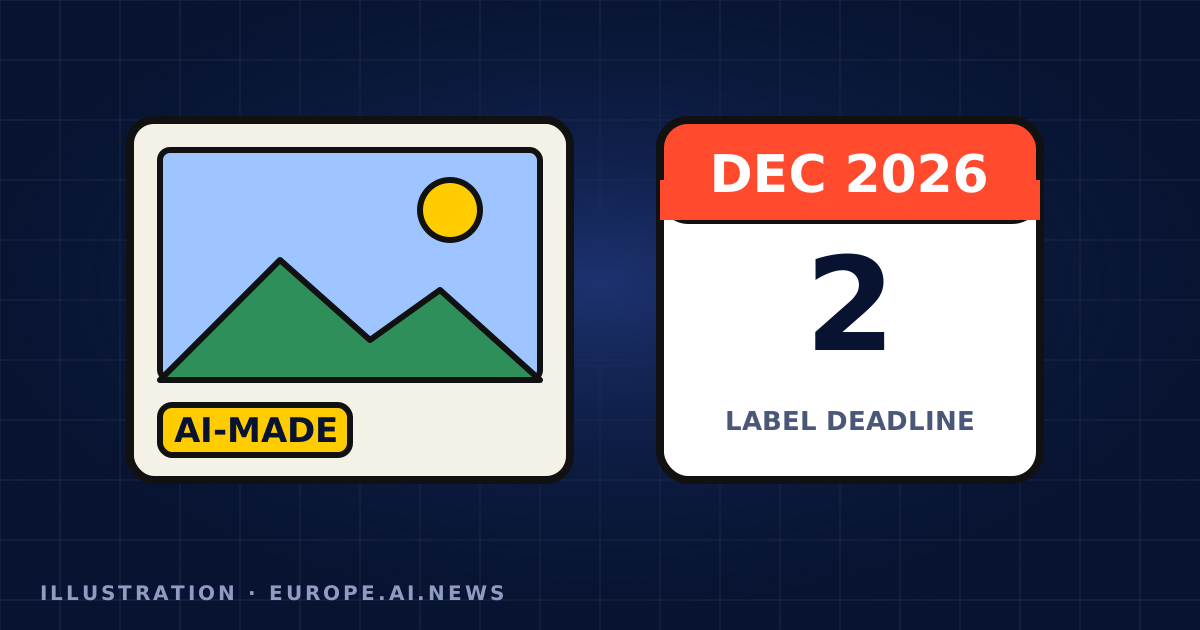
The EU's AI Act says that content made by AI, such as images, audio, video and some text, must be marked so that software can detect it. This is meant to help platforms and fact-checkers spot fakes. These rules, in Article 50 of the Act, have applied since 2 August 2026.
AI tools that were already on the market before that date were given extra time. According to law firms Reed Smith and Orrick, their makers have until 2 December 2026 to add the machine-readable marking, for example hidden data in the file or a watermark.
Separately, the European Commission has published a voluntary Code of Practice on how to mark and label AI content. It was finalised on 10 June 2026 and about 190 organisations had signed it by the end of July. It also includes EU icons that organisations can use to label deepfakes and other AI-made content. Signing is optional, but the legal duties are not.
Sources: European Commission, Code of Practice on Transparency of AI-generated Content · Reed Smith, Transparency obligations for AI-generated content · Orrick, EU AI Act Update: Digital Omnibus Finalizes 8 Compliance Changes
Written in our own words from the sources above. Illustration by Europe.AI.News. Spotted a mistake? Email [email protected] and we'll correct it.
More AI news
 Norwegian court pauses Meta's new terms over use of news for AI2 Nov 2026
 Mistral releases Large 4, a huge open AI model built in Europe30 Oct 2026
 Siri's new AI gets a memory, but it still isn't switched on in the EU27 Oct 2026
 Proton will "re-interview" staff about how they use AI27 Oct 2026
Use AI with confidence
Everyday.AI is our no-jargon guide to using AI safely in daily life and work, made for Europe.
See Everyday.AI